 ultimate-guide
Is Luxury Glamping Actually Private?
Table of Contents
- What 'Private' Actually Means in Luxury Glamping
- Luxury Glamping Amenities Checklist: What Defines a High-End Stay
- Is Luxury Glamping Actually Private? Common Gaps Between Marketing and Reality
- Benefits of Private Geodome Glamping vs. Other Glamping Structures
- How to Choose a Secluded Glamping Getaway: A Verification Checklist
- Is Glamping Worth the Cost? Weighing Privacy Against Price
- Frequently Asked Questions
Last Updated: September 1, 2026
What 'Private' Actually Means in Luxury Glamping
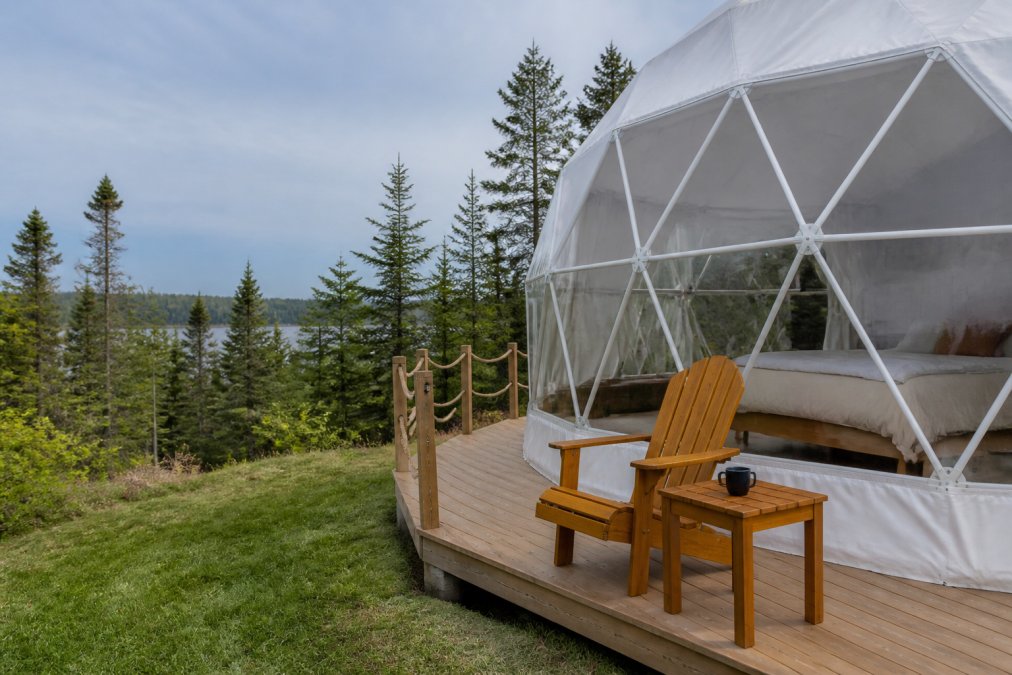
The question "is luxury glamping actually private" is one that more travelers are asking before they book. At Northeast Cove Geodomes, we hear it constantly from couples planning a romantic getaway: will we truly feel alone out there, or will we be sharing a field with strangers who can hear every conversation?
The honest answer is: it depends entirely on how a site is designed, not how it's marketed.
Luxury glamping combines the immersive experience of nature with hotel-quality amenities, including private ensuite bathrooms, climate control, quality linens, and often a fully equipped kitchenette. But "luxury" says nothing about seclusion. A glamping site can offer gourmet meals and high-end finishes while placing your tent three meters from your neighbor's.
This is the gap most travelers don't anticipate until they arrive.
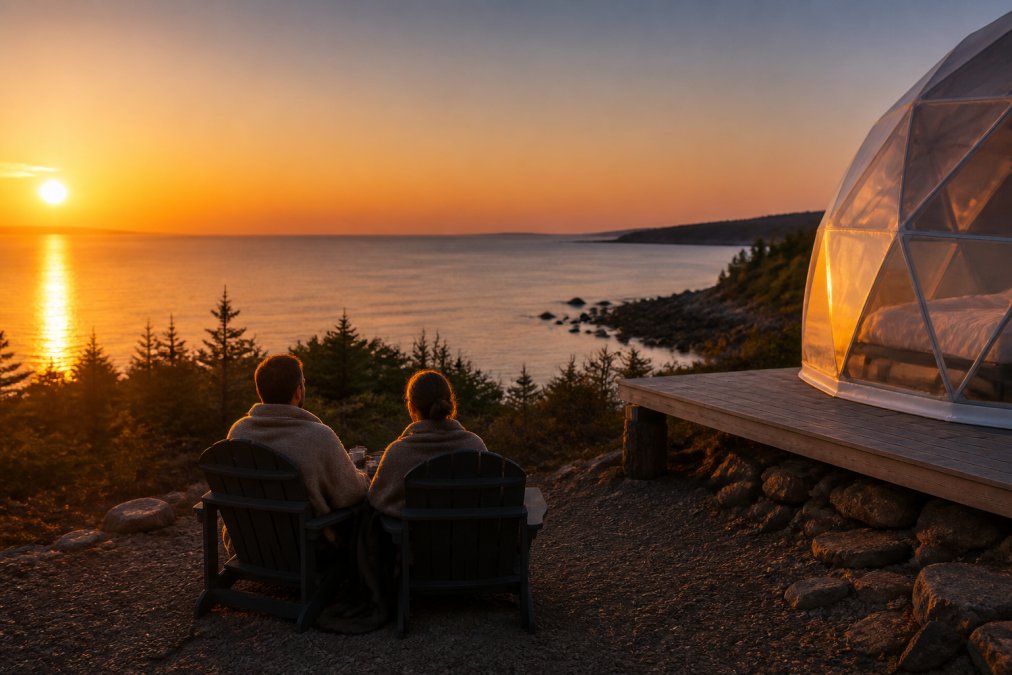
Privacy in glamping is determined by site layout, physical distance between units, natural screening, and whether facilities are shared or dedicated. According to Tourism Industry Association of Canada, guest satisfaction in outdoor accommodation is strongly tied to perceived seclusion, with noise from neighboring guests ranking among the top complaints. Below, we break down exactly what to look for, what to ask, and how to tell the difference between a truly secluded getaway and a luxury experience that happens to be outdoors.
The Privacy Spectrum: From Shared Sites to True Seclusion
Most glamping sites fall somewhere along a continuum:
Communal glamping sites place multiple structures close together, often sharing bathroom facilities, fire pits, and common areas. These are the most affordable option and work well for groups, but not for couples seeking a quiet retreat.
Semi-private sites offer individual structures with some buffer between them, but shared facilities or a central lodge mean you'll encounter other guests regularly.
Fully private sites are purpose-built for seclusion. Each unit has its own ensuite bathroom, private entrance, and enough physical separation that you cannot hear or see other guests. This is the standard for true private luxury glamping.
A private entrance and ensuite bathroom are the minimum baseline for claiming true privacy. Without both, the experience is semi-private at best, regardless of marketing claims.
Luxury Glamping Amenities Checklist: What Defines a High-End Stay
Amenities separate genuine luxury camping from an expensive tent. The difference between what's advertised and what's delivered is where most disappointment lives.
Here is what a fully realized luxury glamping stay should include:
| Amenity | Why It Matters | Privacy Impact |
|---|---|---|
| Private ensuite bathroom | No shared facilities | High |
| Climate control (heat + cooling) | Comfort in shoulder seasons | Medium |
| Hotel-quality linens | Sleep quality | Low |
| Fully equipped kitchenette | Self-sufficiency, no communal dining | High |
| Private entrance | No shared access points | High |
| Running water and electricity | Off-grid comfort | Medium |
| Dedicated outdoor space | No shared decks or fire pits | High |
En-Suite Bathrooms and Private Facilities
A private ensuite bathroom is the single most important amenity when evaluating glamping privacy. Shared bathroom facilities destroy the seclusion of an outdoor stay, no matter how beautiful the surroundings.
A true ensuite means the bathroom is inside or directly attached to your accommodation unit, accessible only to you. It should include a toilet, shower, and basin with running hot water.
Climate Control, Linens, and Comforts of Home
Geodomes and safari tents can lose heat rapidly in shoulder seasons. A site claiming climate control should specify whether that means electric heating, a wood stove, or a full HVAC system.
Hotel-quality linens and a proper mattress are non-negotiable for a luxury experience. A glamping dome with a proper bed, high-thread-count linens, and a heated interior is fundamentally different from a canvas tent with a camping cot.
Is Luxury Glamping Actually Private? Common Gaps Between Marketing and Reality
Marketing language around glamping privacy is often aspirational rather than descriptive. Terms like "secluded," "exclusive," and "wilderness retreat" appear on listings where units are 15 meters apart. Wide-angle photography compounds this, making four domes look like one.
The most common gaps between marketing and reality:
- Site density. A property with 10 or more units on a small footprint cannot offer genuine seclusion.
- Shared outdoor spaces. Fire pits, dining pavilions, and communal decks mean regular contact with other guests.
- Sound travel. Canvas and fabric structures transmit sound more readily than solid walls.
- Staff access. Daily housekeeping or communal breakfast service introduces foot traffic.
- Proximity to roads or public paths. A geodome near a hiking trail offers less seclusion than listing photos suggest.
As Destination Canada's outdoor tourism research notes, the gap between guest expectations and on-site experience is most pronounced in the premium outdoor accommodation category.
Benefits of Private Geodome Glamping vs. Other Glamping Structures
Geodomes offer a combination of features that other formats struggle to match. Understanding why requires looking at how different structures handle insulation, structural integrity, and immersion in the surrounding landscape.
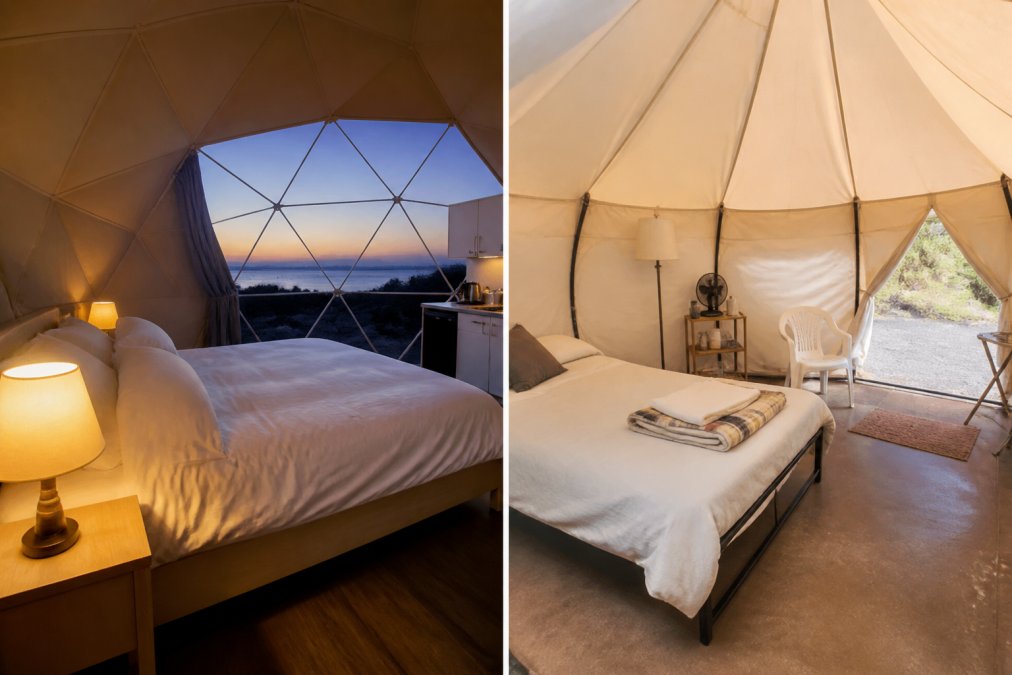
Safari tents offer classic glamping aesthetics but canvas walls provide minimal insulation and almost no acoustic privacy. They struggle in shoulder season temperatures.
Yurts are more structurally sound than canvas tents with better insulation, but their circular shape limits interior layout. Most yurts share bathroom facilities.
Treehouses are visually striking but typically small and challenging to make fully accessible.
Geodomes offer distinct advantages:
- Superior insulation compared to canvas alternatives, making them viable in cooler months
- Floor-to-ceiling dome windows create immersive nature connection without sacrificing comfort
- Compact footprint allows genuine separation from neighboring units
- Solid panel construction provides meaningful acoustic privacy
- Can accommodate a full ensuite bathroom, kitchenette, and climate control within a self-contained unit
For couples seeking a secluded getaway that feels genuinely removed from the world while remaining comfortable through variable weather, a well-designed geodome is the most capable structure available in the glamping category.
How to Choose a Secluded Glamping Getaway: A Verification Checklist
Most travelers spend more time reading reviews than asking the right questions before booking. Reviews tell you what past guests experienced; the right questions tell you what you'll experience.
Questions to Ask Before You Book
Use this checklist before committing to any luxury glamping booking:
- How many units are on the property, and what is the total land area?
- Is the bathroom physically inside or attached to my unit, or is it a separate structure?
- Are any facilities shared with other guests (fire pits, decks, dining areas, laundry)?
- What is the minimum distance between my unit and the nearest neighboring unit?
- Is there daily housekeeping, and if so, can it be declined?
- Are there public hiking trails, roads, or access points adjacent to the property?
- What type of climate control is provided, and what temperature range can it maintain?
- What is the cancellation policy if the experience doesn't meet expectations?
A site that offers genuine privacy will answer these questions without hesitation. Evasive answers about unit proximity or shared facilities are a signal worth taking seriously.
What to Pack for a Privacy-First Glamping Trip
A privacy-focused packing list is shorter than most travelers expect, precisely because a well-designed site handles the infrastructure.
Essentials for a private glamping stay:
- Earplugs or a white noise app
- A headlamp or small lantern for outdoor use after dark
- Layers appropriate to the season, including a waterproof outer layer
- Groceries or provisions if you plan to use the kitchenette
- A portable speaker for personal use (check site policies first)
- Any personal toiletries beyond what the site provides
For waterfront glamping sites, add a dry bag for kayaking gear and water shoes. Sites that include complimentary kayaks, paddleboards, and bikes, as Northeast Cove Geodomes does, eliminate the need to rent or transport equipment separately.
Is Glamping Worth the Cost? Weighing Privacy Against Price
The cost of a luxury glamping stay reflects the infrastructure investment required to deliver hotel-quality amenities in a remote setting. An ensuite bathroom in a geodome requires plumbing, a septic system, and ongoing maintenance. Climate control requires electrical infrastructure. None of this is cheap to build or operate.
The relevant question is not whether glamping costs more than a hotel. It does. The question is whether the combination of outdoor immersion, genuine seclusion, and modern comfort is worth the premium.
A hotel room offers reliable comfort but no nature immersion. A budget camping site offers nature immersion but no comfort. A well-executed luxury glamping experience offers both. That combination is genuinely rare, which is why sites that deliver it operate at or near capacity.
If a glamping site's pricing is significantly lower than comparable properties in the same region, the gap is usually explained by shared facilities, higher unit density, or a shorter operating season. True privacy has a real cost.
What you're paying for, at its best, is an eco-friendly, sustainable tourism experience that leaves a lighter footprint than a resort while delivering a more memorable stay. As noted by Sustainable Tourism Canada's accommodation standards, properties that invest in individual infrastructure per unit rather than shared facilities score higher on both guest satisfaction and environmental stewardship.
The real answer to whether luxury glamping is actually private is this: some of it genuinely is, and some of it is not. The difference is in the details, and those details are worth investigating before you book.
Northeast Cove Geodomes was built specifically to close the gap between the promise of private luxury glamping and the reality most travelers encounter. Each of the four waterfront geodomes is designed for one or two guests, with a private ensuite bathroom, climate control, a fully equipped kitchenette, and genuine physical separation from neighboring units. No shared facilities. No communal paths through your space. Complimentary kayaks, paddleboards, and bikes are available for guests who want to explore the coastline on their own terms. Book your stay at Northeast Cove Geodomes and experience what a truly private outdoor retreat actually feels like.
Frequently Asked Questions
Do you have your own toilet when glamping?
At a truly private luxury glamping site, yes, each accommodation should include a dedicated en-suite bathroom with a toilet, shower, and running water. However, many budget or mid-range glamping sites still use shared washroom facilities. Before booking, confirm whether the bathroom is inside your unit or shared with other guests. Private en-suite bathrooms are one of the clearest markers separating genuine luxury glamping from upscale camping.
What are the common privacy concerns at glamping sites?
The most frequent complaints involve thin walls or canvas between units, shared bathroom facilities, closely spaced structures where neighbours can hear conversations, and communal fire pits or dining areas that reduce seclusion. Site layout matters enormously, a glamping site can advertise 'private' accommodations while placing domes or tents within metres of each other. Always review the site map and ask about the distance between units before you book.
Are geodomes more private than traditional glamping tents?
Geodomes offer structural advantages that most glamping tents cannot match. Their rigid shell provides better sound insulation, and their compact footprint makes it easier for operators to space them far apart on a site. Unlike safari tents, which often share decking or communal areas, well-designed geodome sites can include a private entrance, private outdoor seating, and an en-suite bathroom entirely within the unit, making them one of the more private glamping structures available.
What should I ask a host to confirm privacy before booking?
Ask these questions directly: How far apart are the units? Are bathrooms shared or private? Is there a shared fire pit, dining area, or lounge? Can guests in other units see or hear my accommodation? What is the maximum number of guests on site at one time? A host who answers these clearly and confidently, and who can share a site layout map, is far more likely to deliver the secluded getaway they advertise than one who responds with vague reassurances.
This article was written using GrandRanker
Frequently Asked Questions
Do you have your own toilet when glamping?
At a truly private luxury glamping site, yes — each accommodation should include a dedicated en-suite bathroom with a toilet, shower, and running water. However, many budget or mid-range glamping sites still use shared washroom facilities. Before booking, confirm whether the bathroom is inside your unit or shared with other guests. Private en-suite bathrooms are one of the clearest markers separating genuine luxury glamping from upscale camping.
What are the common privacy concerns at glamping sites?
The most frequent complaints involve thin walls or canvas between units, shared bathroom facilities, closely spaced structures where neighbours can hear conversations, and communal fire pits or dining areas that reduce seclusion. Site layout matters enormously — a glamping site can advertise 'private' accommodations while placing domes or tents within metres of each other. Always review the site map and ask about the distance between units before you book.
Are geodomes more private than traditional glamping tents?
Geodomes offer structural advantages that most glamping tents cannot match. Their rigid shell provides better sound insulation, and their compact footprint makes it easier for operators to space them far apart on a site. Unlike safari tents, which often share decking or communal areas, well-designed geodome sites can include a private entrance, private outdoor seating, and an en-suite bathroom entirely within the unit — making them one of the more private glamping structures available.
What should I ask a host to confirm privacy before booking?
Ask these questions directly: How far apart are the units? Are bathrooms shared or private? Is there a shared fire pit, dining area, or lounge? Can guests in other units see or hear my accommodation? What is the maximum number of guests on site at one time? A host who answers these clearly and confidently — and who can share a site layout map — is far more likely to deliver the secluded getaway they advertise than one who responds with vague reassurances.